NAC at 600 mg vs 300 mg/kg: Two Very Different Jobs
NAC at 600 mg and 300 mg/kg are not the same claim. Learn why dose, route, and glutathione depletion decide if NAC evidence fits a supplement.
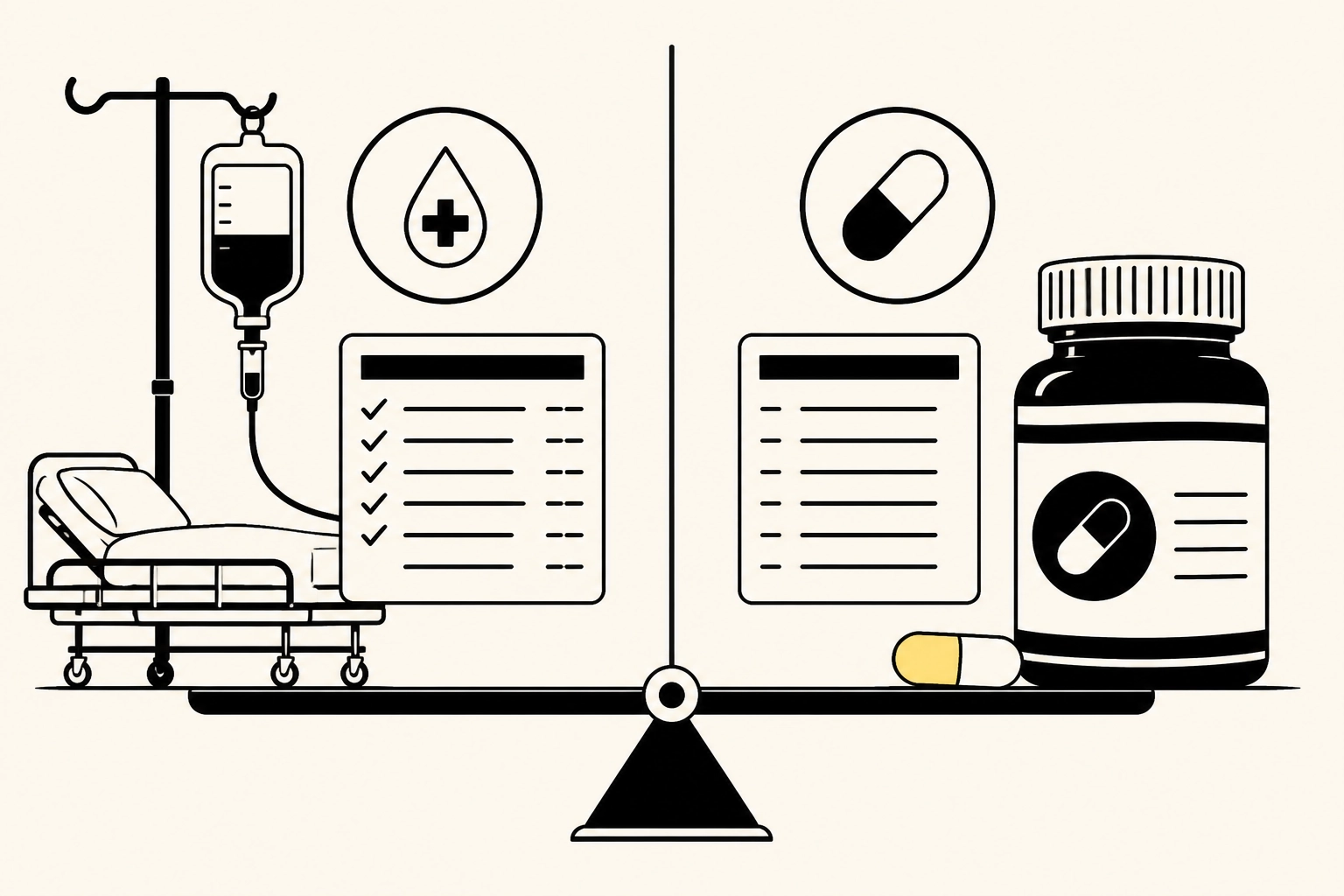
The same white powder sits on pharmacy shelves and in hospital emergency rooms. Yet almost every confident claim you read about an NAC supplement is quietly borrowing its credibility from a hospital protocol that uses 300 mg/kg, not 600 mg. That gap is not a detail. It is the entire story. This analysis separates the two jobs NAC actually does: the high-dose antidote for paracetamol overdose, where the mechanism is glutathione repletion under genuine depletion, and the low-dose supplement, where the evidence is far thinner and the same mechanism only matters if depletion is real. You will learn what 600 mg and 300 mg/kg genuinely mean, how the hospital regimen works and what it warns against, when glutathione repletion is relevant, what a shelf-dose product can and cannot claim, why supplement marketing borrows from emergency medicine, how to read a NAC label without being fooled, and what the shorter-regimen research does and does not establish. By the end, you will check the dose behind any claim before it influences a purchase.
Two Doses, Two Worlds: What 600 mg and 300 mg/kg Actually Mean
The supplement side is a small oral dose, measured in milligrams. The same molecule enters hospital care at a different scale: 300 mg/kg is a weight-based intravenous course, so a 70 kg adult receives 21,000 mg in total, 35 times a single 600 mg capsule.
That total is not one injection. The current FDA label splits it into three doses over 21 hours or two doses over 20 hours, and patients of 40 kg or less use the three-bag regimen (FDA label). The units are the first trap: mg measures an absolute amount, mg/kg scales with body weight, and a total course is not a loading dose or a single maintenance dose.
Route changes exposure as well. The hospital product is intravenous and titrated by protocol; the shelf product is oral, with different absorption and a different safety profile. Route is not a detail: oral B12 matched injections across 6,098 people, yet that result belongs to B12, not NAC. Keep the two contexts separate. A consumer dose is not a smaller version of an emergency protocol, and an emergency protocol is not evidence for a consumer dose.
The Hospital Job: 300 mg/kg as a Paracetamol Antidote
Timing carries most of the benefit, and infusion safety sets the conditions of use. The FDA label lists observation for anaphylaxis, rash, hypotension, wheezing and bronchospasm. The UK MHRA uses a staged course: 150 mg/kg over 1 hour, then 50 mg/kg over 4 hours, then 100 mg/kg over 16 hours, capped at 110 kg in obese patients and extended when clinically indicated.
Timing carries most of the benefit. The MHRA describes IV NAC as virtually 100% effective at preventing liver damage when given within 8 hours of paracetamol overdose, with efficacy falling substantially afterwards. That is why arriving a day late doubled the odds of death or transplant, and why delayed presentation remains a distinct clinical problem.
Safety is not optional: the FDA label requires observation for anaphylaxis, rash, hypotension, wheezing and bronchospasm. A hospital antidote with life-threatening infusion reactions is not a wellness protocol with a gentler name.
What Glutathione Repletion Really Means, and When It Matters
The hospital regimen is built on a specific vulnerability. Glutathione, the body's cysteine-based detoxifier, normally handles the toxic metabolite NAPQI. In a paracetamol overdose, sulfation and glucuronidation saturate, the toxic metabolite NAPQI builds up, and glutathione sinks as it conjugates the toxin. This is not a theoretical cascade: at 4 g of paracetamol a day, a third or more had raised liver enzymes in one study, and the accidental half got there through products with other names.
Koppen et al. frame NAC as a glutathione precursor in precisely that setting. The point is not a general antioxidant boost. It is restoring a depleted detoxification pathway before NAPQI injures hepatocytes. The clinical weight behind this mechanism is substantial: paracetamol overdose was linked to 39% to 49% of US acute liver failure cases from 1998 to 2003, according to Koppen et al.. That is the weight behind an antidote, not behind a shelf claim.
If glutathione is not depleted, repletion has no defined target. A 600 mg capsule may raise cysteine availability, but that is not the same as correcting a toxic depletion or preventing liver failure. Mechanism claims need three things: a depletion state, a dose, and a route. Strip out those three and "glutathione precursor" becomes a description of biochemistry, not a promise about outcomes.
The Shelf Job: What a 600 mg NAC Supplement Can and Cannot Claim
That depletion condition is the missing piece on the shelf. A 600 mg NAC supplement is sold as a supplement, not as a drug, and the difference is legal as well as clinical. Labels use structure-function language such as liver support or antioxidant support, which regulators distinguish from claims to prevent or treat disease under the framework for structure/function claims.
The evidence at 600 mg is thin and uneven. Human studies vary by dose, formulation, population and endpoint, so a positive result at 1,200 mg or 1,800 mg cannot be scaled down to 600 mg by arithmetic alone.
Mucolytic use is a separate job, carried out in clinical respiratory settings. That evidence does not make a 600 mg capsule an overdose antidote or a general liver protector.
The honest claim is narrow: a 600 mg product delivers NAC. Whether that changes a health outcome depends on population, baseline depletion, dose and duration, and those details are rarely on the label.
Why NAC Supplement Claims Borrow Credibility From Emergency Medicine
The borrowing is effortless because the molecule is identical. A marketer can truthfully state that this is the same NAC hospitals use, then omit the rest: 300 mg/kg intravenously, under a protocol, with observation for anaphylaxis.
Each popular claim then draws from a different shelf of evidence. Liver protection borrows from the overdose antidote. Mucus clearance borrows from clinical respiratory use. Glutathione support borrows from mechanistic studies of depletion. None of these is a study of a 600 mg oral capsule in healthy adults.
The dose-first rule fits in a sentence: a result obtained at 300 mg/kg IV does not transfer to 600 mg oral unless the new dose, route, population and endpoint have themselves been tested. Different dose, different exposure, different people, different thing being measured.
There is a deeper mismatch. The antidote works because glutathione is depleted and the toxic metabolite is accumulating. Healthy supplement users rarely have that state. Without depletion, the outcome the hospital measures is absent, so the marketing claim has nothing to anchor to.
So when a NAC supplement page cites emergency medicine, look for the number that follows: 600 mg, 1,200 mg, 150 mg/kg or 300 mg/kg. If the page will not say, the credibility is borrowed rather than earned.
How to Read a NAC Supplement Label Without Getting Fooled
The borrowing works because the label rarely gives you what you need to check it. Here is the sequence that turns a marketing claim into something testable.
Dose per serving, in units. Look for milligrams of NAC per capsule and per serving. A label that states "NAC" with no mg figure, or that folds it into a proprietary blend, cannot be matched to any study. Walk away from that one.
Route and formulation. Oral capsule, effervescent tablet and IV infusion are different exposures. The FDA label describes Acetadote as intravenous only, so an infusion study tells you nothing about a swallowed capsule.
Population. Was the research in overdose patients, chronic lung disease, athletes or healthy adults? A 600 mg claim needs a 600 mg study in people like you. Nearly all NAC evidence comes from overdose patients.
Endpoint and duration. A blood marker shifting over eight weeks is not the same as preventing liver failure, and a 21-hour hospital course is not a supplement plan.
Safety detail. The FDA label warns of anaphylaxis and bronchospasm with IV NAC. Oral NAC is not the same product or route, so treat its risk profile as unestablished rather than proven safe, particularly if you have asthma, drug allergies or a long medication list.
Run every claim through these five checks. What survives is worth reading. What does not was never about your dose.
What the Shorter-Regimen Research Does and Does Not Tell Us
Reading a label carefully is the first filter. The second is reading the study behind a headline. The SNAP trial is a useful test case. A prospective multicentre study compared the 12-hour SNAP regimen with the traditional 21-hour protocol, both at 300 mg/kg total, in 165 patients: 103 on SNAP and 62 on the traditional regimen. Peak transaminases did not differ, suggesting similar efficacy. SNAP patients had fewer adverse effects and shorter stays: 17.8 versus 25.9 hours in the emergency department, and 2.6 versus 4.4 days on the ward.
Those figures are encouraging but not definitive. The study was not randomised; patients were assigned by emergency department protocol. The stay differences are directional, not settled proof that one regimen is better for every patient.
Regulatory practice is also moving slowly. Observational studies have looked at NAC dose and duration in high-risk ingestions treated early, but their design cannot settle the dose question by itself. Which is why the checklist still starts with the dose.
The Dose-First Takeaway
Shorter regimens change logistics, not the dose-first rule. Before any NAC claim means anything, establish four facts: dose, route, population, and time window. A study using 300 mg/kg IV in overdose patients does not test a 600 mg oral capsule, and the antidote's window closes while the person still feels fine, so timing is part of the claim.
Those infusion risks do not transfer neatly to a capsule, but they show why the gap between the label's warning dose and the poisons threshold is 2.5-fold matters more than marketing language.
Treat a 600 mg NAC supplement as a low-dose consumer product with a thin, indirect evidence base. Discuss it with a clinician if relevant; do not substitute it for emergency care or treat it as proven liver treatment.
Conclusion
Shorter regimens may change logistics, but they do not erase the need to establish dose, route, population, and time window before any NAC claim means anything. Infusion risks do not transfer neatly to a capsule, and marketing language should not borrow emergency-medicine credibility. Your next step: before buying or using a 600 mg NAC supplement, read the label for those four facts and discuss it with a clinician; never substitute it for emergency care. Treat claims with precision, and you can make safer, better-informed choices.